

For a long time, there was a kind of monopoly in the market for budget studio, outdoor, and reportage flashes. The choice of flashes was very limited – the available models were all compatible with one radio system, and if someone was looking for affordable flashes for shooting in the studio and on location, there weren’t many options.
This situation has gradually started to change due to the increasingly extensive range of flashes from GlareOne. The manufacturer is steadily expanding its series of popular Vega and Antares studio flashes, which offer very stable and repeatable flashes in their class. Recently, they have also introduced battery-powered flashes from the Apus and Botis series. The former are classic reportage flashes with rectangular flash tubes, but in this article, I would like to focus on the Botis flashes.
Reliable flashes in the studio and on location
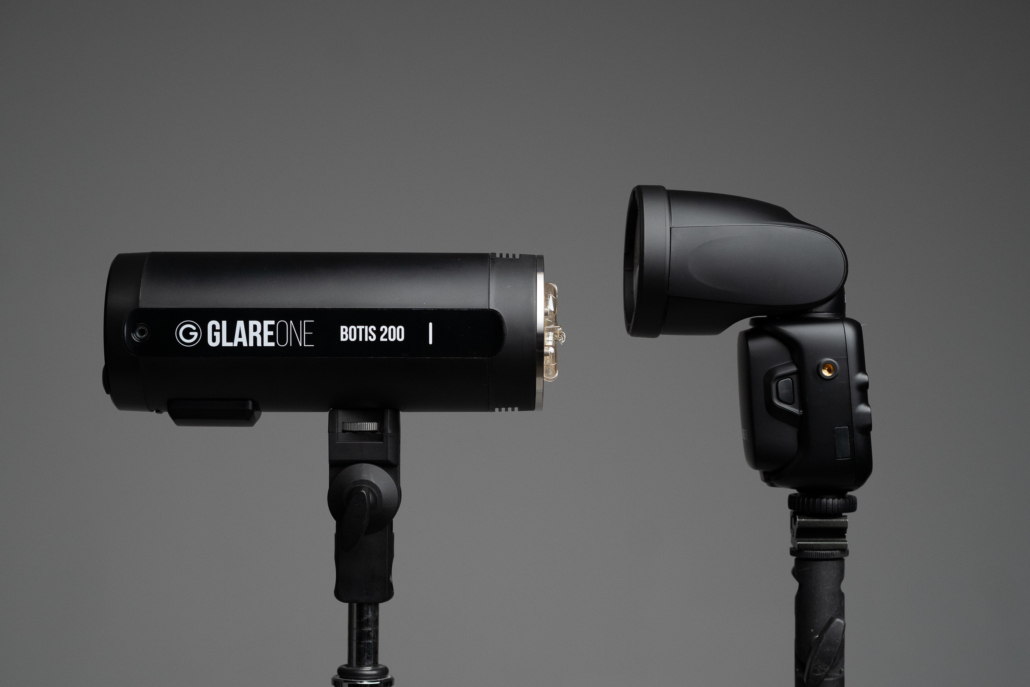
Currently, two models are available: Botis 80 and Botis 200. The numbers in the name correspond to the number of watt-seconds generated by these flashes. The Botis 80 is a reportage flash with a round head, but its housing hides a little surprise. Behind the diffuser, there is a round flash tube, similar to the one found in studio flashes, not the classic rectangular reportage flash tube simply placed in a round head. A similar flash tube design can also be found in the Botis 200. The round flash tube ensures that the light is evenly distributed and perfectly interacts with accessories.
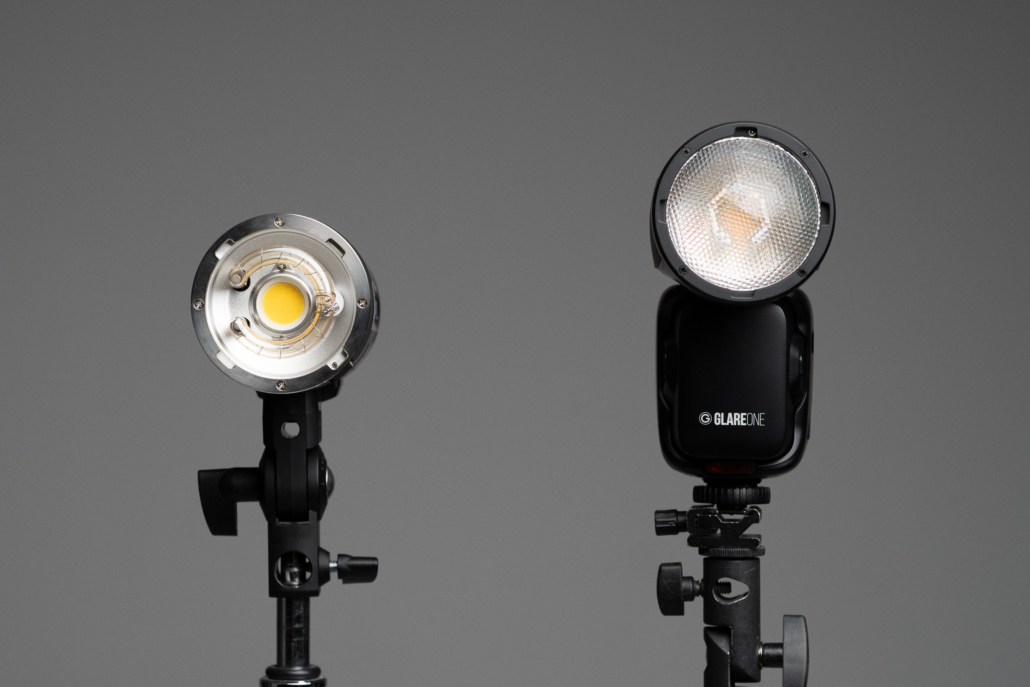
Speaking of accessories, the heads of these models allow for the attachment of a Bowens mount, which enables the use of many different light modifiers with the Botis flashes. Both the Botis 80 and 200 models feature a 3W and 5W LED modeling light in the center, with a warm color temperature. In a dark room or late in the evening, this can also be used to light objects in our photos or videos.
The Botis 200 is a very classic mobile outdoor flash with a simple rear display showing the current flash power in f-stops from 1.0 to 9.0, in steps of 0.1. It is the perfect mobile solution for outdoor shooting – especially where there is no need to overpower the sun with a large softbox, but where we want to illuminate a face in the shadow and balance the flash with ambient light. The 200Ws also provides enough light for comfortable studio work, not only with wide apertures but also for beauty sessions requiring greater depth of field.
GlareOne Botis flashes in practice

Mod: Zuza @zuzqa.s MUA: Ewa @szminkabydgoszcz
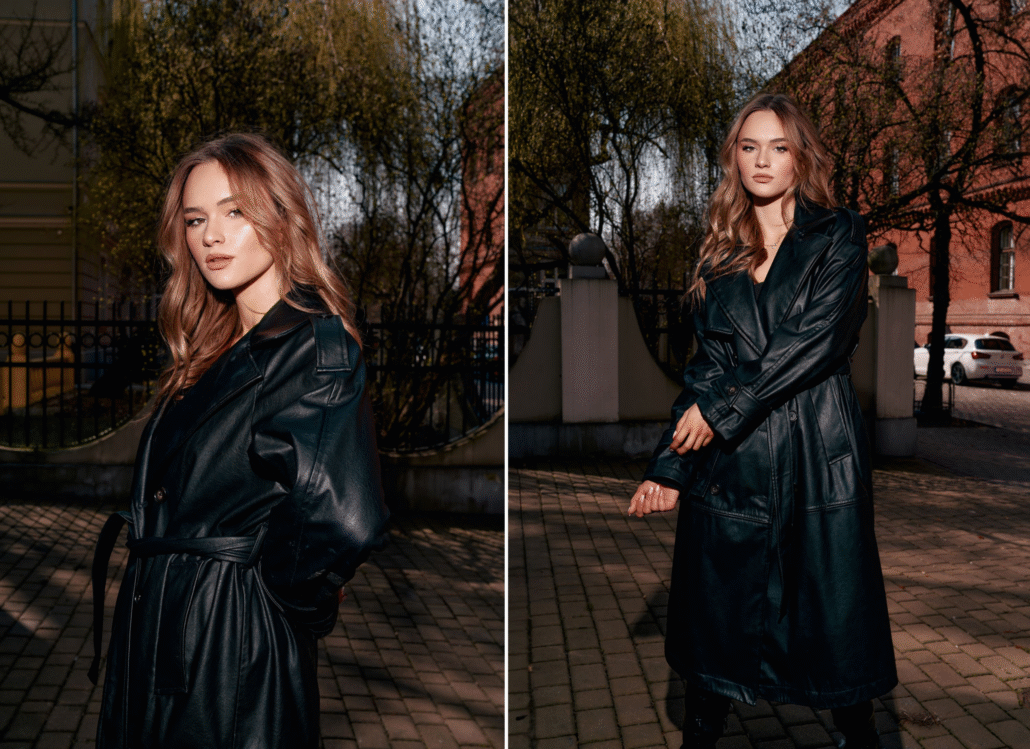
In the above photos, the Botis 200 flash was the main light source. In the first shot, the flash was directed with its bare flash tube toward the wall and ceiling behind me, creating a large light source directly in front of the model. In the second image, a 65 cm foldable Beauty Dish with a silver dish reflector was attached to the flash. In the third shot, a reflector with a grid, which comes with the Botis 200, was mounted on the flash.
200 Ws was more than enough for the flash to work for 2-3 hours without any issues and with plenty of battery reserve, even after over 650 flashes at less than full power, all at ISO 200 and aperture f/16.
The Botis 80 flash also has plenty of power, and although it is a more classic reportage flash, it works excellently as an additional light source in outdoor shoots. Recently, there’s been a trend for photos with a sharp flash, and as a dedicated strobist, I couldn’t resist using it in full sunlight. Although 80 Ws is already almost the limit when trying to fight the sun on a cloudless day, if we manage to bring the flash close enough to the model’s face, at ISO 50, 1/200 s, and f/16, we can slightly tone down the ambient light.
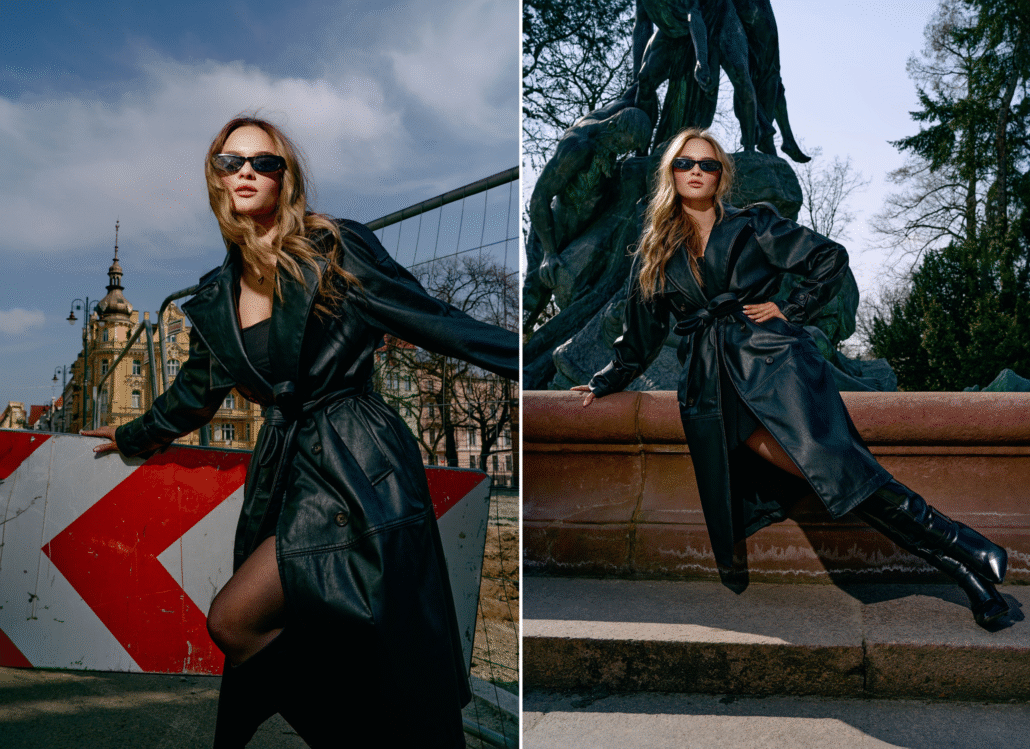
When shooting in the shade, we no longer need to push the flash to its maximum and can confidently use even a fraction of its capabilities.
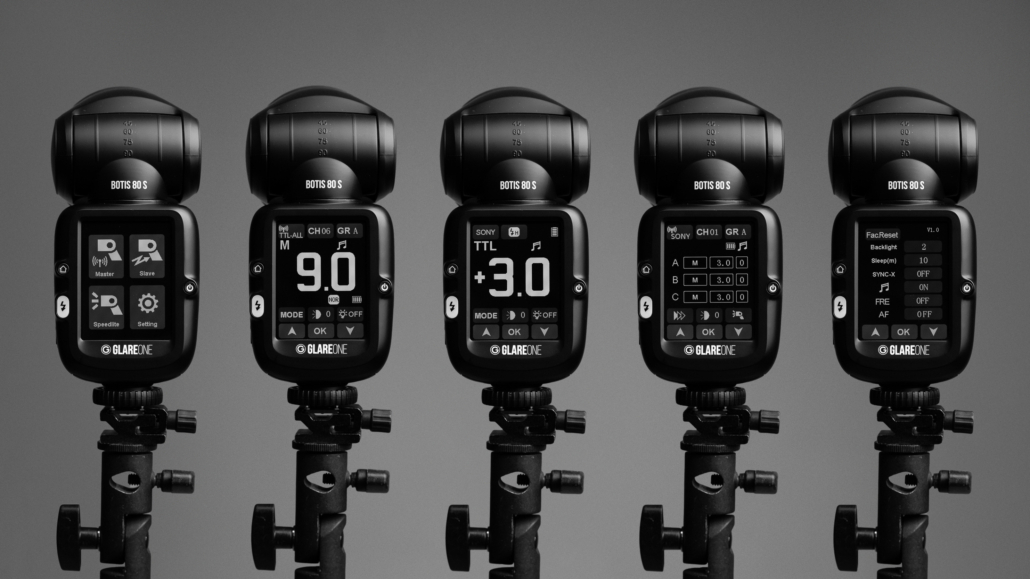
The flash is operated through a large touch display, which we can also lock by holding down the physical button with the home icon. This prevents us from accidentally changing our settings.
Full Compatibility of the GlareOne Flash System
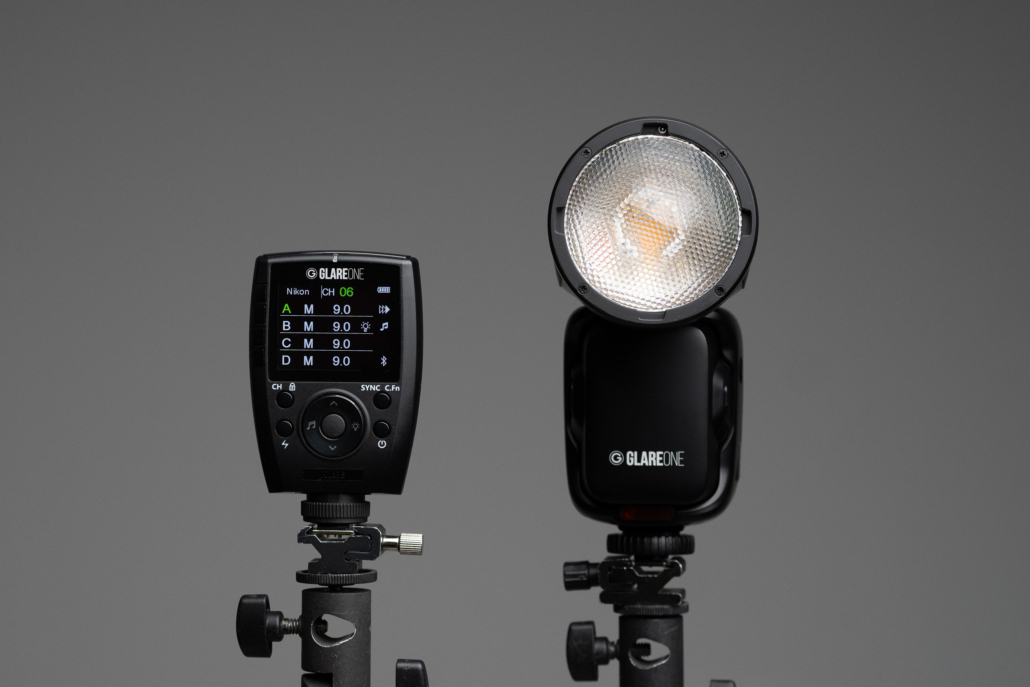
What makes the new GlareOne flashes a serious competitor in the flash market is the consistent radio system across the entire product range (and beyond). The new Polaris transmitter allows for triggering and controlling not only the new battery-powered flashes but is also compatible with the studio flashes GlareOne Vega and GlareOne Antares, which have been on the market for some time.
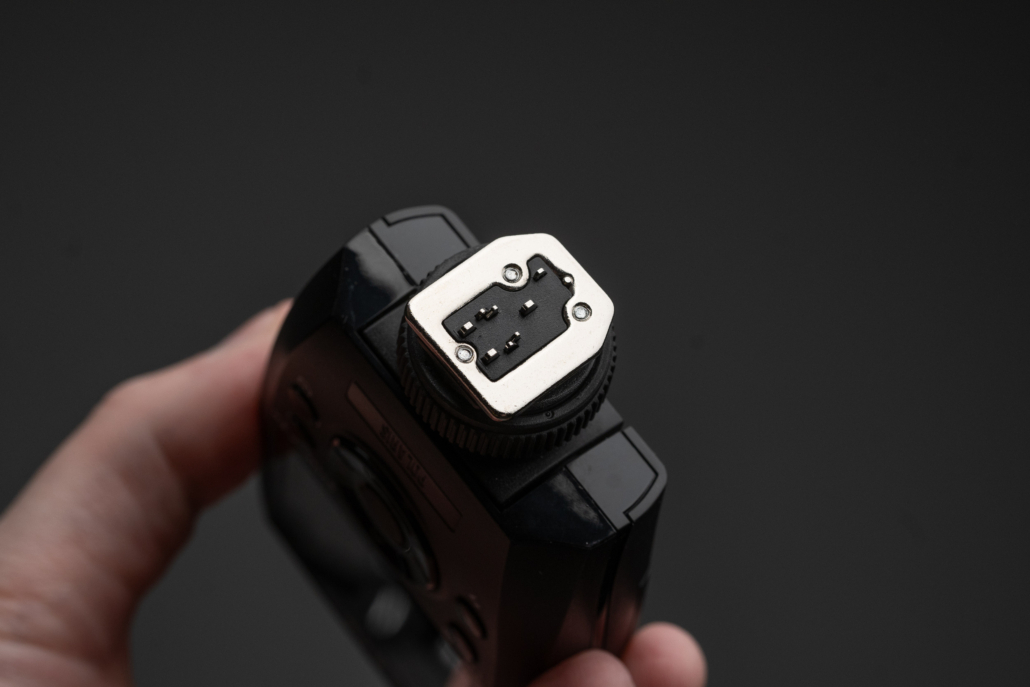
All flashes are equipped with radio receivers compatible with almost every camera system, and the Polaris transmitter comes in two versions: one dedicated to the Sony system and a universal version for the other systems. The universal transmitter works in TTL with Nikon, Canon, Fuji, Olympus (OM-System), Lumix, and features contacts on the hot shoe that activate depending on the selected system. The central contact works manually with all flashes and systems.
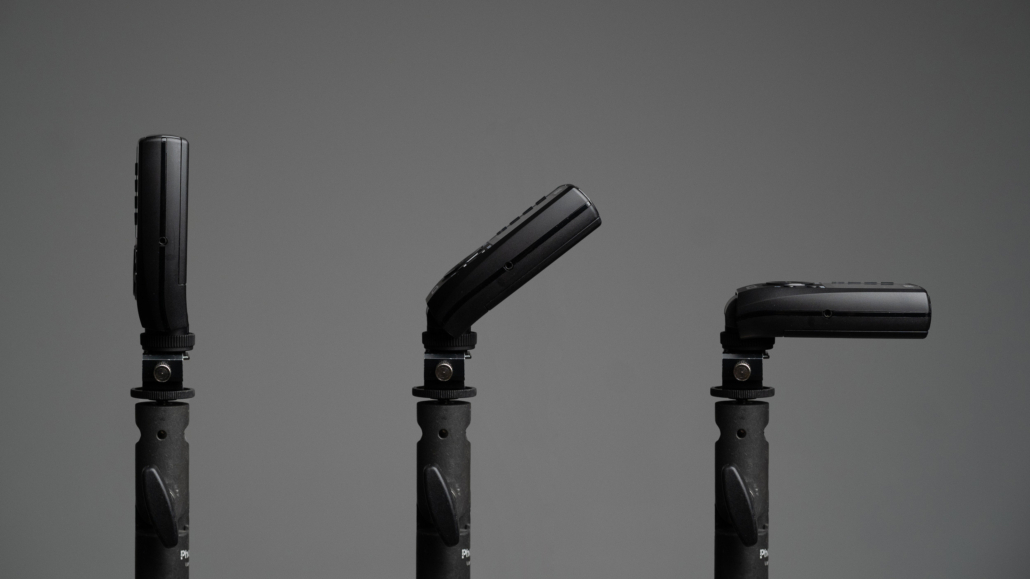
The transmitter at the hot shoe also has a hinge, allowing it to be positioned vertically, tilted, or horizontally.
Precision and stability of the GlareOne flash system
For me personally, the biggest advantage of the GlareOne flash system, starting with the Vega 400, is the stability and repeatability of the flash. This is not only about any deviations from the norm between different settings of a single flash, but also the consistency of the entire system. The Botis flashes, both among themselves and with their parameters, have a maximum temperature deviation of +/-100K from the baseline of 5500K. This allows you to freely mix several flashes together without worrying about color differences between light sources.
For comparison – a very popular competitor’s flash with a round flash tube aimed at a white wall, with the white balance set to a neutral 5500K, generates cooler light around 6500K.
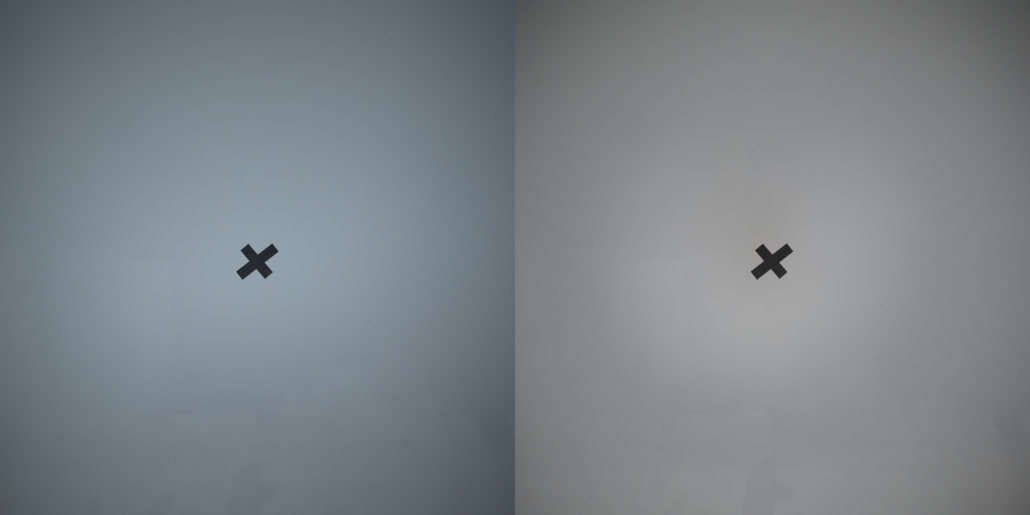
Personally, for my individual needs, I decided to work with the Vega 400 flashes after I came back home from a session at school with over 5000 evenly lit photos. At this price, I haven’t encountered such repeatable results yet.
My problem was always the desire to mix different flashes, both studio and outdoor, because I needed two transmitters and to set one system to a photocell. Currently, this problem resolves itself thanks to the new Botis flashes. However, I still miss slightly more powerful flashes, such as 400Ws or 800Ws, but there is a solution as well, since there are flashes from other manufacturers on the market that are compatible with the GlareOne system.
The new series of battery-powered flashes from GlareOne is a solid option for demanding photographers who are looking for budget-friendly yet high-quality solutions.
You can find more information about GlareOne at glareone.pl, as well as on Instagram, Facebook, and the GlareOneTV profile on YouTube. I also invite you to visit my channel, JacekWPhoto, where I test and showcase various interesting solutions, including the new GlareOne flashes.
Jacek Woźniak

Portrait and commercial photographer. He specializes in all types of photography that require additional lighting, and in his spare time, he runs an educational YouTube channel with over 300 videos on retouching and photography. In between raising two sons, working full-time, running a business, and recording videos for YouTube, he also paints photography backdrops under the brand Kuyavia Backdrops.
Read more articles
 https://glareone.eu/wp-content/uploads/2025/12/030_KA519858_Olga_Social.jpg
1366
2048
Kamila Przyjemska
http://glareone.eu/wp-content/uploads/2024/04/logo-glareone.png
Kamila Przyjemska2025-12-22 10:52:262025-12-22 13:40:35GlareOne Flash Lights in a Sports Photo Shoot – Have the Botis 400 and Botis 600 Changed the Game?
https://glareone.eu/wp-content/uploads/2025/12/030_KA519858_Olga_Social.jpg
1366
2048
Kamila Przyjemska
http://glareone.eu/wp-content/uploads/2024/04/logo-glareone.png
Kamila Przyjemska2025-12-22 10:52:262025-12-22 13:40:35GlareOne Flash Lights in a Sports Photo Shoot – Have the Botis 400 and Botis 600 Changed the Game? https://glareone.eu/wp-content/uploads/2025/12/Glare-One-12-1-scaled.jpg
1708
2560
Kamila Przyjemska
http://glareone.eu/wp-content/uploads/2024/04/logo-glareone.png
Kamila Przyjemska2025-12-19 13:52:462025-12-19 14:39:25Conscious lighting in photography – combining flash power with LED subtlety
https://glareone.eu/wp-content/uploads/2025/12/Glare-One-12-1-scaled.jpg
1708
2560
Kamila Przyjemska
http://glareone.eu/wp-content/uploads/2024/04/logo-glareone.png
Kamila Przyjemska2025-12-19 13:52:462025-12-19 14:39:25Conscious lighting in photography – combining flash power with LED subtlety https://glareone.eu/wp-content/uploads/2025/12/dz0zMDAwJmg9MjIwNA_src_240555-Clipboard2-scaled.jpg
1881
2560
Kamila Przyjemska
http://glareone.eu/wp-content/uploads/2024/04/logo-glareone.png
Kamila Przyjemska2025-12-17 12:04:232025-12-17 13:22:48New player in the flash market – GlareOne Botis 80 and Botis 200
https://glareone.eu/wp-content/uploads/2025/12/dz0zMDAwJmg9MjIwNA_src_240555-Clipboard2-scaled.jpg
1881
2560
Kamila Przyjemska
http://glareone.eu/wp-content/uploads/2024/04/logo-glareone.png
Kamila Przyjemska2025-12-17 12:04:232025-12-17 13:22:48New player in the flash market – GlareOne Botis 80 and Botis 200